



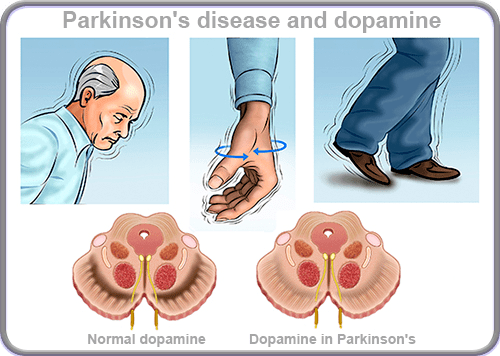
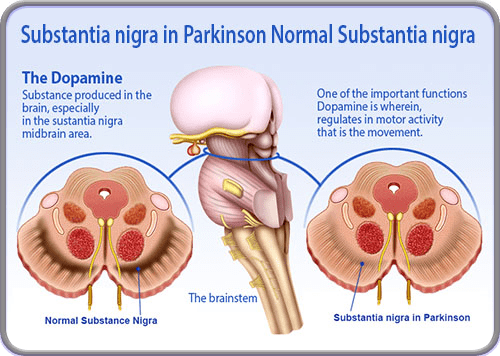

Parkinson’s disease manifests clinically as a chronic neurodegenerative disorder caused essentially by the progressive loss of dopamine within the human brain structure. Evidently, this chemical deficiency noticeably weakens the facial muscles, the neck, and the delicate throat tissues. Consequently, affected individuals experience persistent pain, generalized muscle fatigue, and severe difficulties articulating coherent speech correctly. Likewise, involuntary tremors generate constant shaking and uncontrolled movements affecting the upper and lower extremities initially. On the other hand, these clinical manifestations can begin by altering a single side of the body before progressing inevitably toward the opposite side.
In summary, voluntary mobility is drastically reduced, preventing the individual from moving or walking freely through their surrounding environment. Without any doubt, it is common to observe that the patient shuffles their feet during locomotion, taking very small, slow, and cautious steps. Scientifically, the root of this pathology lies in the cellular degeneration of the designated cerebral substantia nigra. In fact, dopamine acts as a fundamental neurotransmitter of the central nervous system, whose primary function consists of regulating general motor activity. Normally, this chemical compound is produced within the mesencephalon zone, transmitting crucial information between different interconnected groups of neurons.
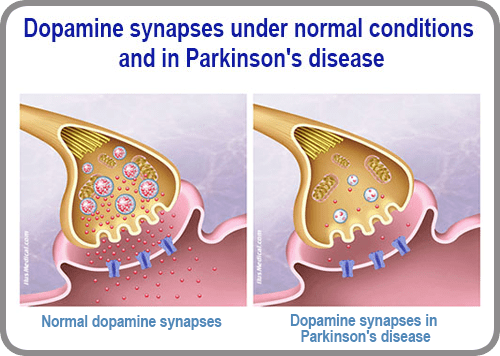
In patients with this condition, dopaminergic neurons die prematurely, causing the gradual loss of ordinary physical coordination. Obviously, as these specialized cells disappear completely, the brain interrupts the biological production of this vital chemical substance. As previously mentioned, this neurotransmitter transports specific messages through complex mechanisms of a chemical and electrical nature. In this manner, the substance regulates interneuronal communication toward other superior cerebral regions responsible for planning movement. Therefore, the degenerative process alters the basic circuits of the motor cortex, making automatic motor control impossible. In conclusion, understanding this neurological disorder allows the development of better clinical therapies to slow down cellular damage and optimize the overall quality of life.


