


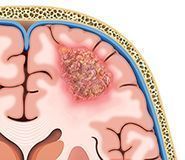
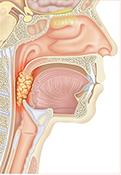
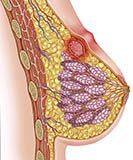
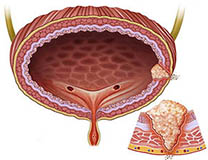
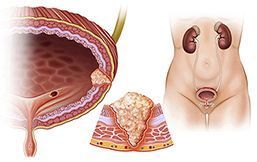
Illustrations: Changes in Neoplasms. In this section, we will examine illustrations related to these diseases and see how abnormal cells multiply uncontrollably and can invade surrounding tissues. Neoplasms can be benign when they spread only locally and malignant when they behave aggressively, compress surrounding tissues, and spread to distant sites. Externally, they appear as a mass or tumor. The cells that make up neoplasms are clonal, meaning they descend from a single progenitor cell. In Alterations in Neoplasms, we will see that these cells from malignant neoplasms can also spread to other parts of the body through the blood and lymphatic systems.
Types of malignant neoplasms
There are several types of malignant neoplasms: carcinoma, melanoma, sarcoma, leukemia, lymphoma, and myeloma. Malignant neoplasm and cancer are two terms with the same meaning. One of the causes of skin cancer is prolonged sun exposure and, in some cases, genetic factors. Solar radiation is the most important factor, as ultraviolet rays can damage cellular DNA, but skin cancers can also have a genetic cause and a family history of skin neoplasms.
You can also adjust the image to your needs. The surcharge will be based on its complexity.
You can also create a unique illustration according to your needs; the surcharge will be based on its complexity.
The images are linked to the image descriptions and obviously to the buy button.




________________________________________________________________________________________________________________


_________________________________________________________________________________________________________________




_________________________________________________________________________________________________________________




_________________________________________________________________________________________________________________


________________________________________________________________________________________________________________________________




________________________________________________________________________________________________________________________________



________________________________________________________________________________________________________________________________




________________________________________________________________________________________________________________________________




________________________________________________________________________________________________________________________________


________________________________________________________________________________________________________________________________


________________________________________________________________________________________________________________________________


________________________________________________________________________________________________________________________________


________________________________________________________________________________________________________________________________
In Illustrations Alterations of Neoplasms, we will see different types of skin cancer, melanoma, and carcinoma. Melanoma is a malignant neoplasm. It is the most aggressive skin tumor and has the worst prognosis of all. Melanoma originates on the skin’s surface, specifically in the melanocytes, the cells that give the skin its dark color. In most cases, it appears in people who have maintained significant exposure to the sun.
Evolution of melanoma
Melanoma in the early stages, when it does not infiltrate the skin, has an excellent prognosis for cure. When it grows in depth, the cure options are complicated. It can quickly spread to other areas of the body, where it is already very difficult to treat and metastasize. Basal Cell Carcinoma: It starts in the deepest layer of the skin, very rarely produces metastasis, and a correct surgery eliminates the disease. Spinocellular carcinoma: It starts in the outermost layer and is detected mainly in the parts of the body most exposed to the sun. They usually do not spread to other organs, although they can grow and invade nearby tissues.
